Hi, I’m Patrick.
An Associate Professor in the Human-Computer Interaction Institute in the School of Computer Science at Carnegie Mellon University, where I direct the AXLE Lab.
I study accessibility, wearable technology, and build assistive technologies. As an accessibility and human-computer interaction researcher, I explore how technology can be used to understand human ability and support empowerment, independence, and improved quality of life. My research has focused on understanding user needs and designing technology systems that enhance and leverage the full potential of users with diverse abilities. While I spend a majority of my time on assistive technologies, I am also interested in web development, user experience, and physical computing.
I completed a postdoc working with Jeffrey Bigham at CMU. I received my doctorate in Human-Centered Computing (HCC) at UMBC, where I worked with Amy Hurst in the Interactive Systems Research Center (ISRC) and Prototyping and Design Lab (The PAD).

Recent publications
2026
-
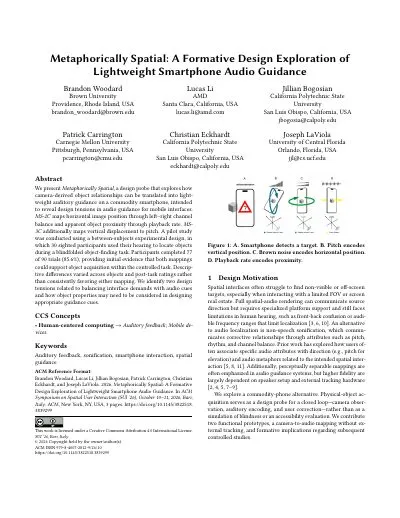
Metaphorically Spatial: A Formative Design Exploration of Lightweight Smartphone Audio Guidance
2026 SUI
-
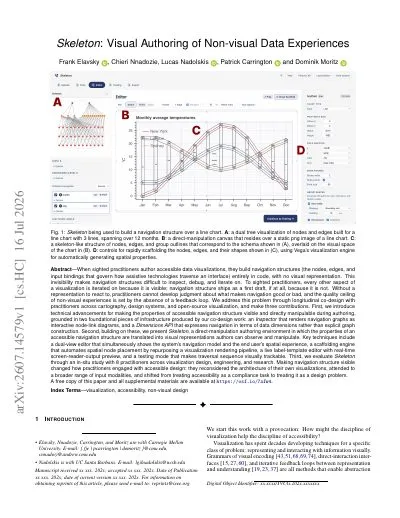
Skeleton: Visual Authoring of Non-visual Data Experiences
2026 TVCGBest Paper Award
-
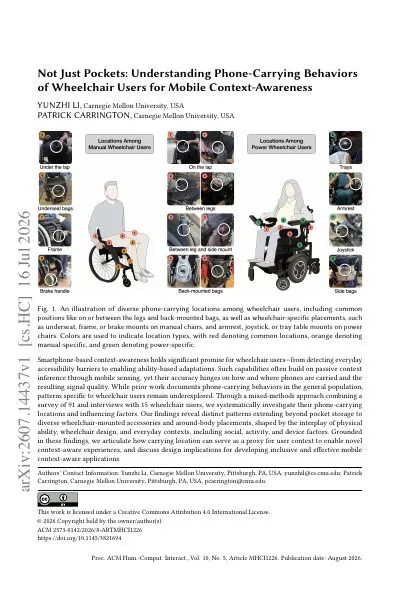
Not Just Pockets: Understanding Phone-Carrying Behaviors of Wheelchair Users for Mobile Context-Awareness
2026 MobileHCI · 37.8% acceptance
-
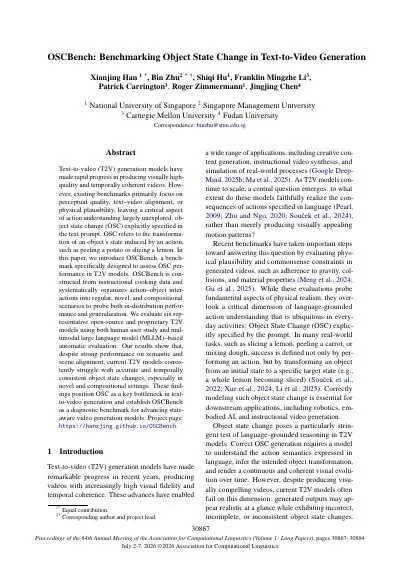
OSCBench: Benchmarking Object State Change in Text-to-Video Generation
2026 ACL · 18.9% acceptance
-
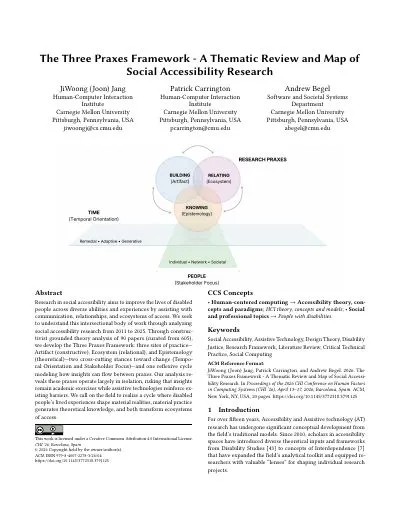
The Three Praxes Framework: A Thematic Review and Map of Social Accessibility Research
2026 CHI · 25% acceptance
-
“I followed what felt right, not what I was told”: Autonomy, Coaching, and Recognizing Bias Through AI-Mediated Dialogue
2026 CHI · 25% acceptance
- DOI — “I followed what felt right, not what I was told”: Autonomy, Coaching, and Recognizing Bias Through AI-Mediated Dialogue
- PDF — “I followed what felt right, not what I was told”: Autonomy, Coaching, and Recognizing Bias Through AI-Mediated Dialogue
- arXiv — “I followed what felt right, not what I was told”: Autonomy, Coaching, and Recognizing Bias Through AI-Mediated Dialogue
-
From Autonomy to Sovereignty: A New Telos for Socially Assistive Technology
2026 CHI · 25% acceptance
-
Toward Softerware: Enabling Personalization of Interactive Data Representations for Users With Disabilities
2026 IEEE CG&A
-
Pluriversal Approach to Co-designing Delivery Robots with People with Disabilities
2026 HRI · 23.8% acceptanceBest Paper Honorable Mention
The AXLE Lab
We study how technology can understand human ability, reach people it has historically left out, and support quality of life. That includes independence, interdependence, agency, and autonomy, which shape one another. Our work spans accessible interaction, mobility, sports, and immersive technology.
Teaching
- Designing Human-Centered Software 05-391/891 FA2026, SP2026, SP2025, FA2024, SP2024, FA2023, SP2023, FA2022
- Introduction to Accessibility and Assistive Technology 05-332/632 · formerly 05-499/899 FA2025, FA2024, SP2022, FA2021, SP2021
- Programming Usable Interfaces 05-430/630 FA2020, SP2020